CEC Calls for Stronger Connectivity, Credibility and Cooperation to Unlock Energy Investment
Government and industry leaders at ZIM-ZAM 2026 outline what is needed to turn investment commitments into reliable power for people and industry
Livingstone, Zambia, 3 November 2026 – Government and energy industry leaders from Zambia and Zimbabwe today called for stronger regional connectivity, credible policy frameworks and closer cooperation to turn the two countries’ shared energy potential into investment, infrastructure and reliable power, during the opening of the 3rd Zimbabwe–Zambia Energy Projects Summit (ZIM-ZAM 2026) in Livingstone.
The summit which is being held under the theme “Celebrating How Zambia and Zimbabwe Have Unlocked FDI Through Connectivity, Credibility and Cooperation,” brings together policymakers, financiers and developers to move discussions from energy potential to bankable projects, investable infrastructure and partnerships that deliver results.
Speaking at the opening session, Copperbelt Energy Corporation Plc (CEC) Chief Projects Officer, Mr. Vincent Nyirenda, said the three elements of the theme were practical requirements rather than slogans.
“The question before us is simple, can Zambia and Zimbabwe turn our shared energy potential into shared prosperity? At CEC, we believe we can,” affirmed Mr. Nyirenda. “Ultimately, the measure of progress will not be the number of projects we discuss, but the projects we finance, the infrastructure we build, the power we deliver and the productive economic activity that energy enables.”
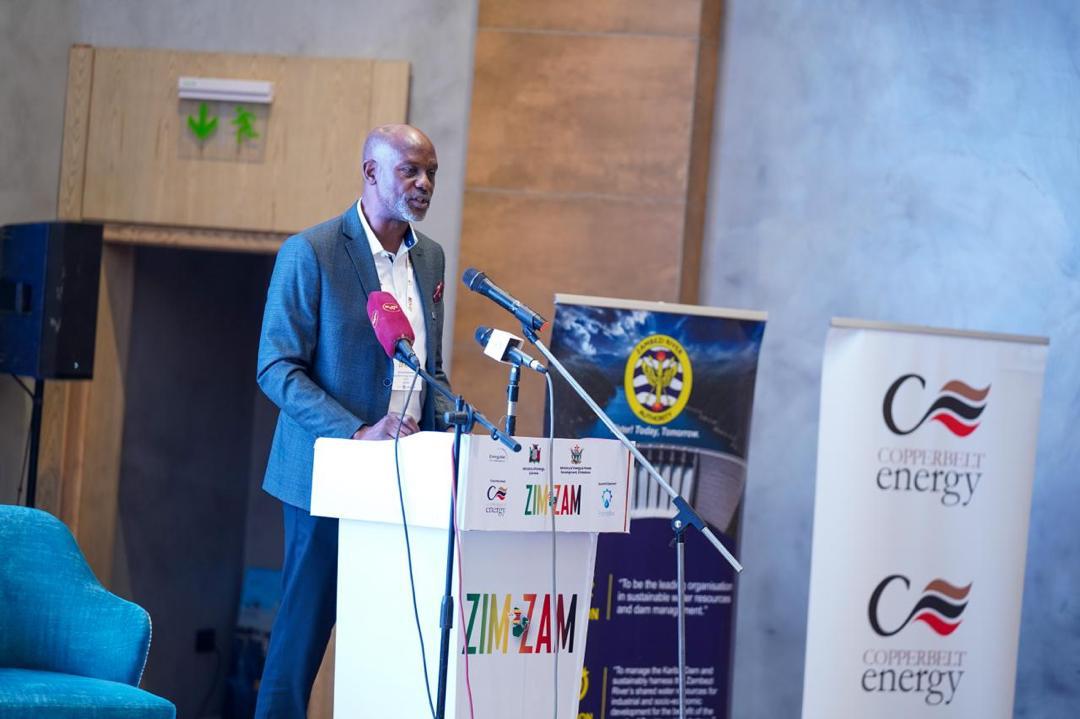
CEC is already delivering on this commitment. This year alone, the company commissioned 148 MW of solar PV capacity. Its project pipeline includes additional solar generation, battery energy storage, transmission expansion and interconnector projects aimed at strengthening the grid and increasing regional electricity trade. Building on decades of supplying power to the mines and industries that support economic growth, CEC aims not only to supply electricity, but to support productive economic activity in mining, mineral processing, manufacturing and agriculture on both sides of the border.
Speaking on behalf of Zambia's Minister of Electricity, Deputy Director Mr. Brian Mainza said, the policy measures Zambia has introduced to attract investment, including the country's first comprehensive 30-year Integrated Resource Plan, Open Access Regulations and the National Energy Compact, have positioned the private sector as a key driver of growth in the electricity sector, and that Zambia aims to raise the share of non-hydro renewables from 3% to 33%.
“We are cognisant of the fact that power generation alone is insufficient to attain energy security,” said Mr. Mainza. “Zambia is therefore also pursuing transmission and distribution projects, with particular focus on interconnectors with our neighbouring countries.”
Mr. Mainza said these efforts support the energy targets under the Grow Zambia agenda, including the flagship goal of increasing Zambia’s electricity generation capacity to 10,000 megawatts by 2031.
Zimbabwe’s Deputy Minister of Energy and Power Development, Hon. Yeukai Simbanegavi who officially opened the summit said, the country’s reform agenda under the National Development Strategy 2 (2026–2030), aims to increase national generation capacity from about 2,950 MW to 6,000 MW by 2030. She said priority generation projects are expected to add about 2,471 MW of new capacity, and highlighted regulatory reforms introduced this year, including virtual net metering and 25-year renewable distribution and retail licences for independent operators.
“We recognise that generation without adequate transmission infrastructure cannot deliver the desired economic benefits,” said Hon. Simbanegavi. “This is a structured national investment programme rather than a collection of isolated project proposals.”
Hon. Simbanegavi also stressed the importance of regional connectivity, noting that Zimbabwe is advancing interconnection projects with its neighbours, including the proposed link between Zimbabwe, Zambia, Botswana and Namibia, and an interconnector with Mozambique.
A common message from all three speakers was that no single institution can deliver the level of investment the region's energy sector needs. Governments, regulators, utilities, developers, financiers and customers all have a role to play. CEC continues to work as a long-term partner to governments, industry and communities, drawing on its delivery record, regional relationships and technical expertise to take projects from commitment to completion.
In closing, Mr. Nyirenda urged delegates to make the Summit count. “As ZIM-ZAM 2026 begins, let us make every conversation count, every partnership purposeful and every commitment a step towards delivery.”
ENDS
Share this article
Follow us
about CEC
Copperbelt Energy Corporation Plc (CEC) is a Zambian power generation, transmission, distribution, and supply company

Recent CEC news
October 9, 2026
October 5, 2026
October 3, 2026